
Introduction
I once stood in a cold, shadowy barn at dawn and watched workers stumble for switches while birds crowded one corner like they were avoiding an invisible storm. The wrong fixture makes a place feel unsafe and slows productivity — and led barn lights, when done poorly, are often the culprit. Recent reports show lighting mistakes can cut production or welfare metrics by double digits in small farms (some figures say up to 15% loss in egg output under bad light). So what do we actually fix first when the glow is wrong — brightness, spectrum, or timing?
I want to walk you through the practical steps I use when I audit a barn. I’ll point out the obvious fails, the subtle traps, and what to look for next — no fluff, just clear fixes. Let’s move into the real problems and why standard fixes often miss the mark.
Traditional Solution Flaws: Where Common Fixes Fall Short
Why do so many fixes feel like band-aids?
Let me be blunt: swapping to an LED bulb is only step one. Many people think replacing old lamps with new units — or ordering basic poultry lights off a catalog — solves the problem. It rarely does. I’ve walked dozens of barns that “upgraded” and still had flicker, poor color, and strange behavior at night. The usual culprits are simple: poor power converters, wrong color temperature, and ignored lumen depreciation. You can have a bright lamp on day one that fades fast and leaves birds in dim, uneven light within a year. Look, it’s simpler than you think: the fixture matters, but so do the driver and the control system.
Old fixes focus only on wattage or a quick lux reading. That misses photoperiod needs, spectral balance, and driver reliability. Photoperiod impacts behavior — feeding and laying rhythms — and spectrum affects stress and growth. If you only measure lumens, you ignore CRI and PAR issues that directly affect bird comfort and plant growth in mixed-use barns. In my experience, the faulty assumptions are predictable: assume fixtures are compatible, assume stable voltage, assume one setting fits all. They don’t. So we need to dig deeper into how lighting systems, ballasts (where present), and drivers interact — and why a superficial swap can backfire.
New Technology Principles and Practical Steps Forward
What’s Next?
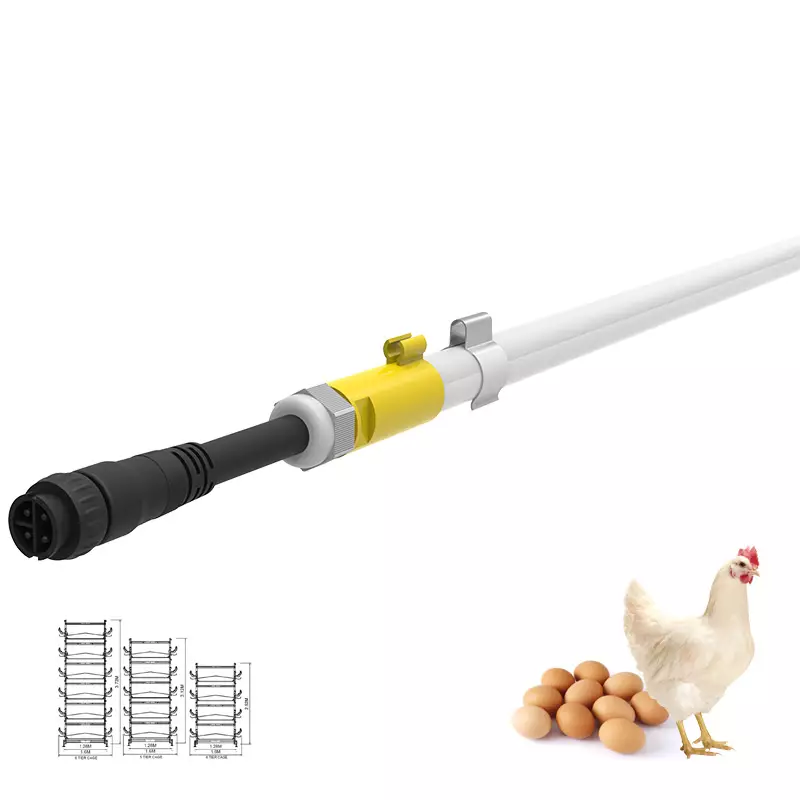
I prefer to think of modern systems as modular: light source, driver, controls, and analytics. New principles stress spectral tuning, dimming granularity, and reliable power converters. For poultry environments, that means tuning PAR and color temperature so birds see comfortably and staff can work safely. Smart controls let you adjust photoperiod profiles for brood, growth, and production phases. When I specify systems now, I ask for a driver with proven thermal management and a control node that logs errors — edge computing nodes help here by processing local sensor input without constant cloud calls — which reduces latency and improves uptime. These details matter. They keep systems predictable and animals calm.
Case in point: a retrofit I led replaced mismatched fixtures with a networked LED solution and added simple spectral presets. Production stabilized within weeks — and energy dropped noticeably. That said, new tech is not plug-and-play; installation and commissioning are where most projects win or lose. Check for IP ratings, driver surge protection, and a clear commissioning report. — funny how that works, right? Also, when budget limits choices, prioritize control quality and driver durability over flashy lumen claims.
Here are three practical metrics I now use to evaluate solutions: 1) Energy efficiency — real measured lumens-per-watt at operating temperature; 2) Spectral match — PAR and CRI appropriate to poultry needs; 3) Control & durability — driver type, IP rating, and reporting capability. Use these when comparing bids and you’ll see the difference in both bird welfare and long-term costs. For trusted components and guidance, I often point people toward resources and suppliers that focus on farm needs, including poultry lights. In the end, small choices add up — and so does reliable support from brands like szAMB.