
Problem first: what breaks when mixing fails
Manufacturers face repeatable, measurable failures: poor dispersion, batch-to-batch variability, thermal hotspots, and unplanned downtime that erodes margins. Teams chasing predictable scale-up often reach for one-off fixes instead of systems thinking. Modern projects need modular hardware, controls that close the loop on process variables, and validated protocols for cleaning and safety — and they’ll look to proven industrial mixing solutions when they need a reliable baseline rather than guesswork.

Where the problem shows up — a grounded anchor
Consider the Gulf Coast petrochemical corridor, where plants routinely shift product grades and face strict environmental reporting; those sites expose the exact problems that industrial teams must solve. Designers there depend on documented process data to choose between in-line homogenizers, high-shear rotor–stator units, and multi-stage dispersion trains. For teams selecting equipment, practical references and vendor-tested designs for chemical mixing systems save weeks of rework and reduce regulatory risk.
Technical failure modes you must anticipate
Scale-up isn’t a simple multiplier. Viscosity, yield stress, and Reynolds number change effective mixing regimes; a propeller that works at 50 L will cavitate or stall at 5,000 L. Shear-sensitive APIs degrade under excessive energy input; poorly managed heat transfer yields hotspots that affect reaction kinetics. Fouling and dead zones hide microbial growth and product contamination. Solve these by quantifying mixing time, power per unit volume, and shear spectrum during pilot runs, then lock those targets into procurement specs.
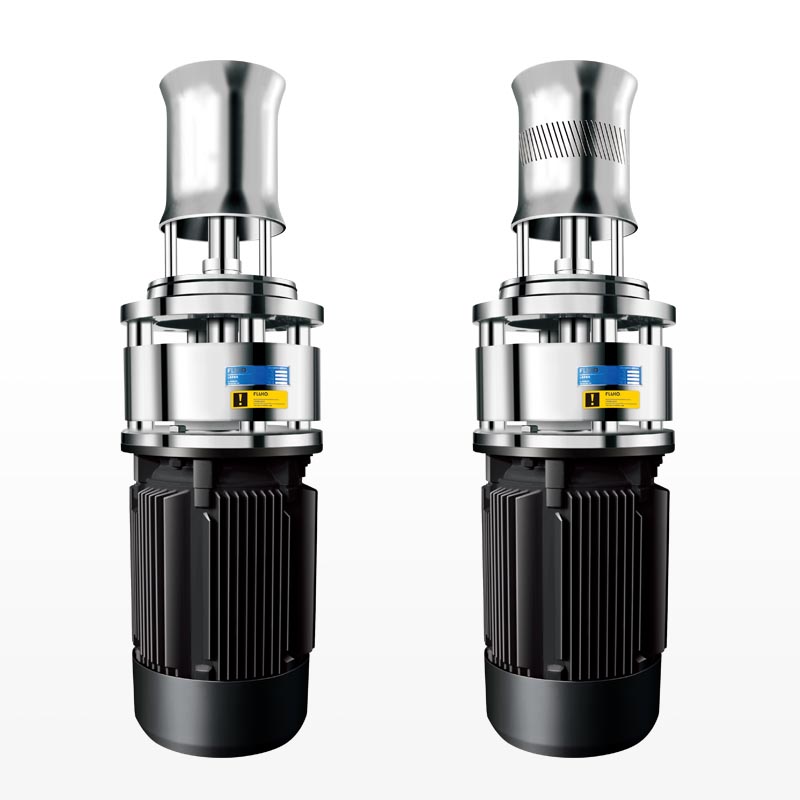
Comparing realistic equipment choices
Static mixers: low maintenance, continuous, good for low-viscosity miscible streams; poor for suspensions or high-viscosity slurries. Rotor–stator (high-shear): fast dispersion, tight particle-size control, common for emulsions; watch for heat generation and wear. High-pressure homogenizers: excellent for nanoemulsions and cell disruption but demand robust seals and maintenance programs. Ultrasonic: precise cavitation control for fine dispersions at small scale, limited throughput without scale-out. Batch tanks with axial-flow impellers: flexible, scalable, best when shear control and CIP matter. Choose by matching shear profile and throughput, not brand hype.
Common procurement and design mistakes
Teams routinely under-specify power margins, ignore impeller-to-tank clearance effects, and omit pilot verification of rheology under process conditions. They accept vendor-standard seals without validating compatibility with solvents or solids load, and they bolt instrumentation onto the vessel without considering sampling bias. Fix these by requiring vendor CFD snapshots, defined acceptance criteria from pilot runs, and a maintenance contract that covers wear parts and seal life.
How manufacturers effectively fit into the solution
Industrial mixing machine manufacturers bring repeatable design patterns: validated impeller geometries, modular drives, standardized seal kits, and control packages that integrate torque, temperature, and speed feedback. Good vendors provide pilot rigs, failure-mode data, and lab-to-plant performance guarantees. Expect them to supply test certificates, change-control support for regulatory audits, and engineering time for control-loop tuning; those deliverables convert a risky purchase into an operable system.
Closing synthesis: strategy that leads to predictable performance
Start with the failure modes you can measure, pick equipment that maps to the shear and throughput envelope you proved in trials, and lock testing requirements into contracts. That problem-driven discipline steers projects away from repeated redesigns and unplanned downtime. Operational teams often select vendors like FLUKO because they supply the engineering artifacts — pilot data, validated designs, and spare-part packages — that make a mixing and homogenization strategy repeatable and auditable.