
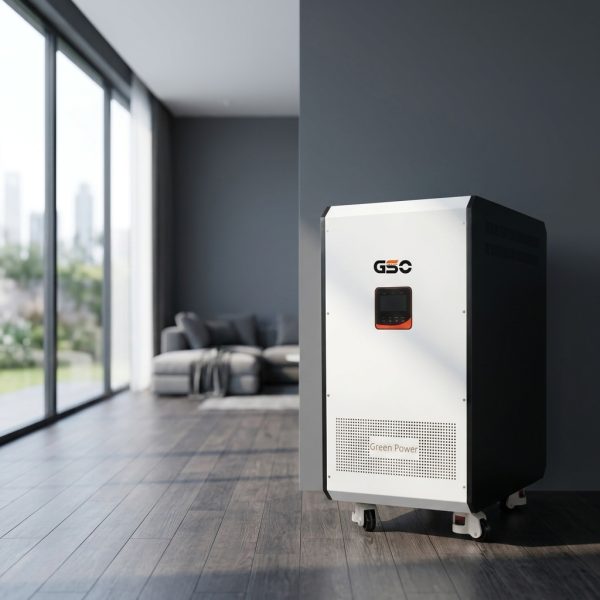
Comparative snapshot: modular vs. monolith
Commercial installers often pick modular, stackable packages because they map directly onto real-world job constraints: variable site sizes, phased budgets, and changing load requirements. The modular approach lets a team scale capacity in clear increments instead of swapping an entire unit. That flexibility also plays well with whole-house battery strategies—see whole house battery backup—where installers can design a hybrid mix of storage and generation to meet both immediate needs and future expansion. In short: modular equals choice and lower wasted inventory.
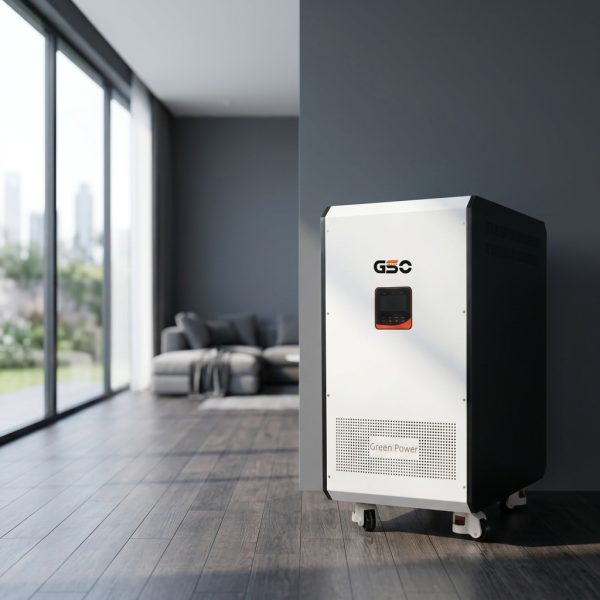
Operational advantages installers actually care about
Modular stacks reduce truck-roll complexity. Instead of lugging one heavy integrated station, crews transport smaller cabinets or battery modules that match elevator, doorway, and rooftop limits. That saves time and reduces risk of damage to LiFePO4 cells during transit. Modular systems also let teams tailor the balance between inverter capacity and battery kWh without overprovisioning — a cleaner fit for commercial loads and microgrid projects, particularly after repeated outages in regions like California where Public Safety Power Shutoffs pushed many businesses to reassess resiliency.
Serviceability, warranties, and lifecycle economics
From a service perspective, modular units win: a faulty module gets replaced in the field rather than bench-repaired or swapped wholesale. That lowers downtime and warranty cost exposure. A robust BMS (Battery Management System) that supports hot-swapping and cell-level diagnostics matters more than raw energy density here. Installers also track total installed cost per usable kWh and prefer systems that let them upgrade capacity in-place as clients add loads — a common evolution for commercial properties.
Design trade-offs and the mistakes I see most often
Installers sometimes underestimate thermal management in stacked arrays — stacking saves footprint but concentrates heat. Poor ventilation shortens cycle life. Another frequent misstep is mismatched inverter sizing: buying more battery kWh than the inverter can discharge wastes capital. Pick components that speak the same protocol; otherwise you’ll wrestle with communications errors during commissioning. Also, avoid assuming that one off-the-shelf package fits every site — sizing to peak load and expected run-time matters. — It’s simple, but people rush.
When an integrated portable or generator still makes sense
Integrated portable stations retain advantages for certain quick-deploy scenarios: emergency response, short-term events, or when a single lift-and-go footprint matters more than long-term upgradeability. Diesel or propane generators still beat batteries on upfront cost for very high, unpredictable loads. For projects aiming at long-term resilience and clean backup, combining a modular battery bank with an intelligent inverter and solar array — effectively a whole-house battery backup with solar solution — tends to deliver better lifecycle economics and smoother maintenance for commercial customers.
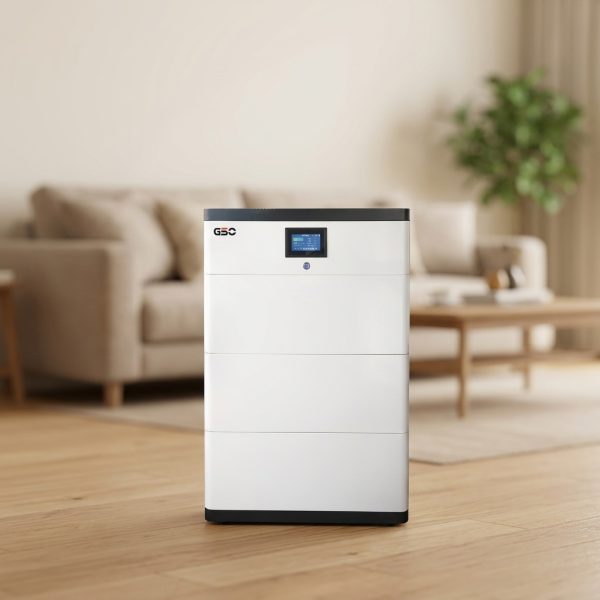
Alternatives in the market and how gsopower stacks up
Competitors offer rack-mounted systems, sealed integrated units, and containerized microgrids. Rack systems excel in utility-scale or data center environments where floor space is abundant and HVAC is controlled. Integrated units work for mobile crews. Modular, stackable designs from suppliers that prioritize serviceable LiFePO4 chemistry, scalable inverters, and clear BMS telemetry appeal most to commercial installers who want predictable field work and repeatable estimates. Real-world deployments after recent grid stress events have shown installers value that predictability.
Three critical evaluation metrics for choosing the right modular system
1) Serviceability score: ease of module replacement, spare parts availability, and remote diagnostics. These reduce truck rolls and warranty churn. 2) Effective system throughput: usable kWh after accounting for BMS, thermal limits, and inverter discharge rates. Measure usable capacity, not just nameplate. 3) Integration flexibility: protocol support for inverters, EMS, and load controllers so upgrades don’t require ripping out hardware.
Choose systems that hit those three metrics and you cut risk, lower lifecycle cost, and speed installations — which is exactly why many pros circle back to modular solutions from brands like gsopower.
— Practical. Proven. Ready for the next site.