
The Comparative Lens: why uniformity still decides the picture
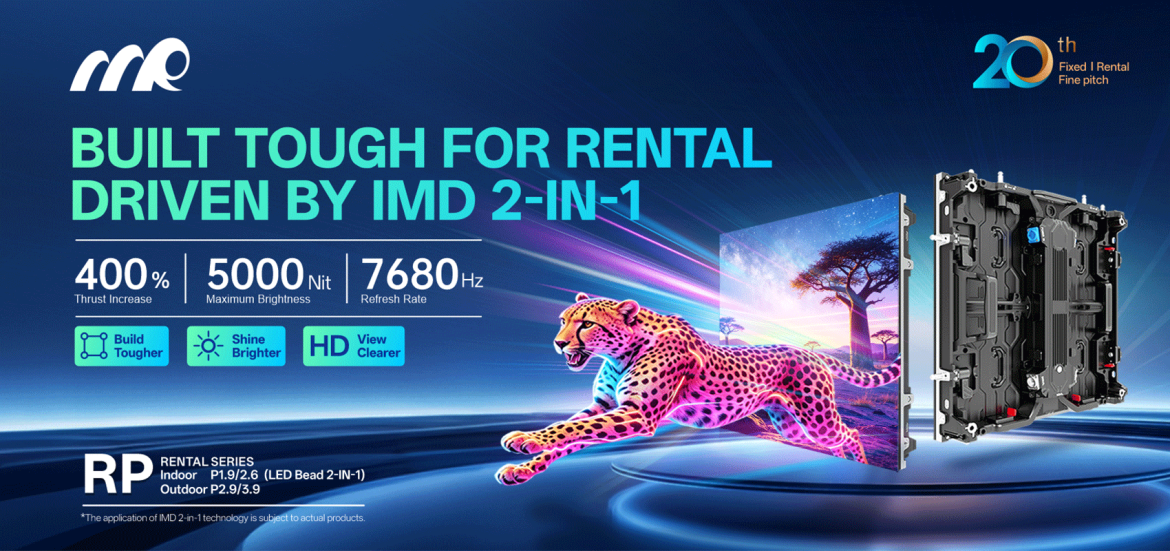
Across a short history of display advances, engineers learned that vivid color and steady brightness are separate promises that must be reconciled. Comparing modern approaches—mini‑LED arrays, emissive OLED, and legacy LED tiles—reveals different fault lines: chroma shift, luminance falloff, and patchy gamma. Practitioners who rent staging or test prototypes often source a rental LED display to simulate conditions before committing to production, since controlled trials expose how each architecture ages under real use.
Architecture and the sources of degradation
Mini‑LED solves some problems by increasing local dimming zones and raising contrast ratio, yet it introduces new challenges: nonuniform backlight distribution and haloing around bright objects. Pixel pitch and local dimming logic interact with colorimetry settings; poor gamma calibration amplifies small inconsistencies into visible banding. By contrast, OLED’s per‑pixel emission avoids backlight blooming but risks permanent burn characteristics over long durations. Historical deployments show that no single technology wins every metric—selection is comparative, not absolute.
What field testing taught manufacturers
Manufacturers and venue operators learned lessons at scale. Apple’s switch to mini‑LED for the 12.9‑inch iPad Pro in 2021 served as a practical reference point: the device improved HDR depth while forcing tighter control of local dimming algorithms. In larger formats, studios that used LED walls in Times Square reported visible shifts after heavy daytime exposure, underscoring how ambient light and thermal cycling drive luminance drift. These real instances guide realistic tolerances for custom panels and inform QA thresholds for led display panels wholesale buyers.
Comparing calibration strategies and practical trade-offs
Three calibration strategies compete in the field: factory profiling, on‑site spectroradiometric tuning, and adaptive firmware updates. Factory profiles yield baseline color fidelity but can’t foresee cumulative wear. Field spectroradiometry corrects color temperature and gamma for installed conditions; it’s precise but time‑consuming. Adaptive firmware uses metered sensor feedback to smooth differences over time—effective, though sometimes at the cost of peak brightness. Operators commonly mix these methods: baseline profiling followed by periodic on‑site passes and firmware patches as needed—an approach that balances cost and consistency.
Common mistakes and alternative approaches
Specifiers often make two errors. First, they assume higher LED density alone eliminates uniformity issues; density helps but won’t fix mismatched binning or inconsistent thermal paths. Second, they undervalue software — smoothing algorithms and per‑module LUTs are as important as hardware. Alternatives include hybrid panels that combine mini‑LED zones with emissive modules for critical areas, or modular cabinets that let teams replace worn sectors rather than an entire wall. These pragmatic choices reduce lifecycle cost and preserve chroma integrity.
Three golden rules when evaluating custom mini‑LED systems
Rule 1: Insist on per‑module calibration data and a plan for periodic re‑profiling. Measured metrics—color temperature stability, delta‑E over time, and luminance decay—should be documented. Rule 2: Verify thermal management and mechanical tolerances; uneven cooling creates persistent luminance gradients. Rule 3: Confirm firmware update paths and sensor integration so adaptive correction can run in the venue without disruptive downtime. These metrics make procurement decisions measurable and defensible.
In sum, selecting a solution becomes an exercise in measured trade‑offs rather than a search for perfect hardware. Comparative trials, anchored to real deployments like Apple’s mini‑LED rollout and live urban installations, sharpen expectations and reduce surprises. For teams specifying, installing, or sourcing displays for demanding environments, the value lies in disciplined testing and a partner who understands both pixel physics and operational realities.
The sensible endpoint is not the fanciest spec sheet but predictable performance over seasons—and that is where experienced suppliers provide tangible value. MR LED. – enduring clarity.