
Problem first: why procurement teams keep getting caught out
Procurement officers repeatedly face the same failures: shipments that arrive with wrong firmware, panels that underperform, or long vendor lead times that wreck promotional calendars. When you approach a tv manufacturer you must assume ambiguity in three areas—technical detail, lead-time certainty, and commercial clarity—and close those gaps before placing volume orders.
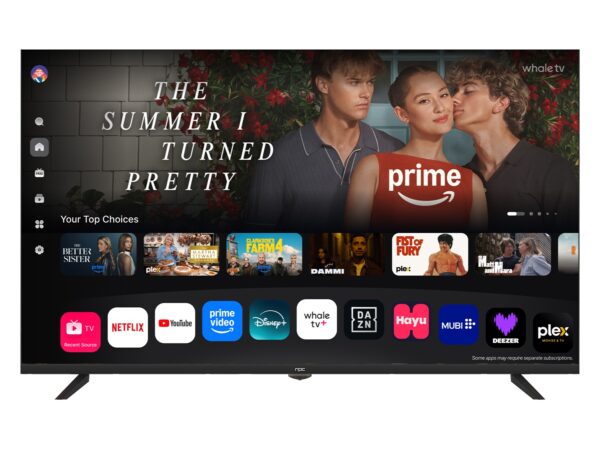
Technical specification and verification
Write a definitive spec sheet and make it contract-ready. State panel size, type (IPS, VA, OLED), native resolution, refresh rate, HDR standard, brightness (nits), colour gamut coverage (e.g., 95% DCI-P3), tuner/DRM requirements, supported codecs, and port layout. Require an engineering sample and arrange independent testing for colour accuracy, motion handling and power consumption. Ask for firmware version logs and an upgrade plan—software is where many TVs fail after six months.
Testing, acceptance criteria and sampling
Agree AQL thresholds for visible defects and dead pixels; specify the test lab standard (e.g., IEC or ISO references). Define burn-in hours, environmental stress cycles (temperature and humidity), and pass/fail criteria for backlight uniformity. Require photos, CSV test logs and a short video from the production line for every batch shipped. If inspections fail, list rectification steps and timelines rather than vague promises.
Supply capacity, lead times and contingency
Confirm monthly production capacity and typical lead times for MOQ and scaled orders. Map the supplier’s critical path: raw-panel procurement, firmware integration, assembly, and packing. Place safety stock or staggered shipments for launches and promotions. Build a penalty or rebate clause for late shipments tied to measurable milestones, and define acceptable force majeure events clearly.
Commercial terms and payment security
Break down the price: unit ex-factory, warranty cost, certification charges, testing, packaging and freight allowances. Use clear Incoterms and name the port for delivery. Prefer letters of credit or staged payments linked to inspection milestones when risk is high. Require a warranty window, RMA procedure, and a spare-parts agreement that covers at least two years of common components.
Factory audit and quality management
Conduct a documented factory audit or ask for third-party audit reports. Check process control for incoming panels, ESD protection, firmware management, and calibration stations. Confirm traceability of batches and a written CAPA (corrective and preventive action) process. Insist on periodic in-line quality checks and a clear escalation path for recurring faults.
Packaging, logistics and customs readiness
Specify packaging that protects against drops, moisture and temperature shifts; include palletisation rules and carton markings for customs. Provide HS codes, certificates of origin and testing documents in advance to avoid port holds. Agree on lead times for air and sea, and plan spare-part consignments separately to avoid cross-mixing with retail shipments.
Evidence and industry grounding
Major trade events show where risk concentrates: lessons from CES in Las Vegas make clear that mass-market feature claims often precede reliable firmware and supply preparedness, and those discrepancies are central to how wholesale televisions are specified and verified. Rely on independent lab reports, supplier documentation and your own sample results to confirm vendor claims rather than trust marketing alone.
Common procurement mistakes to avoid
Don’t accept vague firmware promises, generic warranty statements, or unit prices that omit testing and certification fees. Avoid single-supplier dependency without capacity clauses. Never skip factory visits or remote video inspections, and don’t assume packaging that works for one climate will hold in another.

Synthesis: make procurement predictable
Force clarity at every step: exact specs, testable acceptance criteria, visible production capacity and explicit commercial protections. When those elements are in place, the path from sample to container becomes repeatable; that repeatability is what procurement teams buy. Many buyers find that suppliers whose documentation and testing practices align with these points—such as those visible across supplier catalogues—deliver reliably, and that pattern is apparent when comparing options from npc.