
Start from what your user actually carries
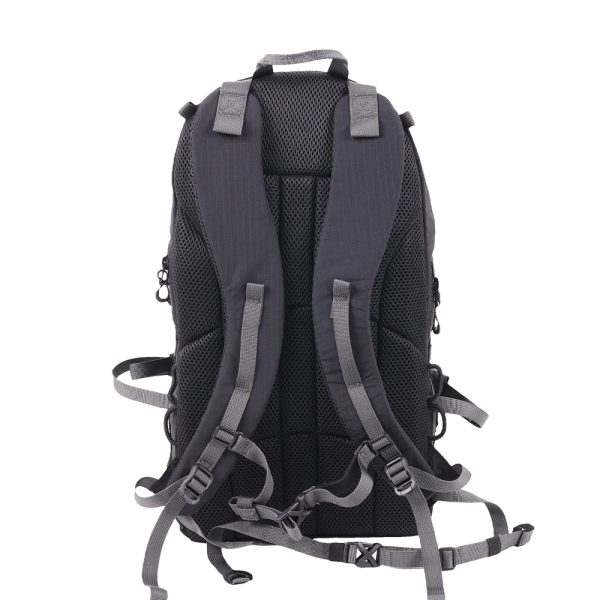
You care about the end user more than the factory’s brochure, so begin by listing real use cases: daily commute, travel, retail giveaways, or rugged field use. That list tells you whether you need recycled PET that resists abrasion, organic cotton for a soft hand-feel, or modular features—think of the way a modular backpack lets one product serve multiple roles. Define capacity, weather resistance, and expected lifespan before you talk to suppliers. Clear use cases speed up samples and stop vague promises from sounding appealing.
Materials, certifications, and traceability
Demand specifics: fiber origin, percentage of recycled content, and the exact standard the mill uses. Look for GRS or RCS for recycled claims, OEKO-TEX for harmful-substance testing, and FSC for any paper or cardboard components. Ask for mill test reports and batch numbers. If they can’t show chain-of-custody documentation, assume the material story is weak. Traceability is a practical way to separate honest sustainability from marketing language.
Production capability, samples, and timelines
Match a factory’s tooling and capacity to your launch plan. Request lead times for prototype, pre-production, and full run — get those in writing. Small brands often need low MOQ options and fast sample turnaround; big brands need stable capacity and predictable ramp-up. Ask how they handle late-stage changes and what the charge is for tooling revisions. A reliable partner will give a realistic schedule and contingency options.
Field testing and real-world anchor
From hands-on testing with urban commuters in New York City, I learned what actually survives daily wear: robust zippers, reinforced stitching at stress points, and pockets that don’t sag. That experience makes it obvious why a practical, well-built bag often ranks as the best edc backpack for men for many users — durable, organized, and comfortable under a full load. Use field testing as your filter: prototypes on real users reveal mismatched specs faster than lab results alone.
How to verify sustainability claims
Check certificates directly on the certifier’s database, not just on the vendor PDF. Ask for recent audit summaries and remediation histories. Request carbon or lifecycle estimates when available, and prioritize mills that publish supplier lists or allow third-party audits. If they cite “reduced water use” or “lower emissions,” ask for baseline numbers and the measurement method. Concrete figures beat vague adjectives every time.
Cost, total value, and long-term thinking
Don’t buy on unit price alone. Consider repairability, warranty policies, and expected replacement intervals. A slightly higher upfront cost for materials and construction that double product life lowers your real cost per use. Clarify packaging standards and return policies up front; surprise fees on packaging, labeling, or compliance testing inflate landed cost quickly.
Common pitfalls and what to avoid
Avoid suppliers that answer every question with marketing phrases instead of data. Watch for ambiguous MOQs, vague sample policies, and reluctance to share production photos or factory contacts. Don’t accept one-off promises about future certification; insist on current, verifiable proof. And don’t skip a pilot order — a small production run reveals process issues that samples can’t.
Alternatives and quick comparisons
Consider three routes: a small ethical mill for handcrafted detail and tight control; a contract manufacturer for larger runs and cost efficiency; or nearshore partners for faster communication and shipping. Small mills give you story and agility; contract manufacturers scale and optimize cost; nearshore partners cut logistics time. Pick the route that matches your timeline and margins, not the one that feels trendiest.
Decision logic that leads to a reliable partner
Prioritize a factory that answers user-focused questions, shows test data, and provides clear timelines. Match materials and certifications to your use cases, verify claims with external records, and validate durability with real-user testing. That practical checklist narrows choices to manufacturers who can actually deliver on promises and scale thoughtfully. If you want a partner that aligns technical rigor with product versatility, ChangRong fits naturally into that workflow, offering the tangible outcomes you need rather than slogans.