
The immediate problem
Buildings allocate outdoor space with optimism but often end up with systems that fail on durability, energy contribution, or occupant comfort—what should be a strategic asset becomes a maintenance liability. Owners ask for shade, architects ask for integration, and facilities managers ask for reliability; each demand points to a single solution class that bridges shading and energy: a solar pergola that is specified to last and perform. This guide treats that gap as a solvable engineering and procurement challenge rather than a design afterthought.

Why failure matters for commercial owners
Poorly chosen pergolas inflate operating budgets through repeated repairs and lost energy value, create liability from weather-related failures, and underdeliver on occupant wellbeing. Decision-makers must weigh upfront capital, lifecycle maintenance, and measurable benefits such as thermal load reduction or on-site generation; treat those metrics as non-negotiable when comparing proposals.
Experience, evidence, and a real-world anchor
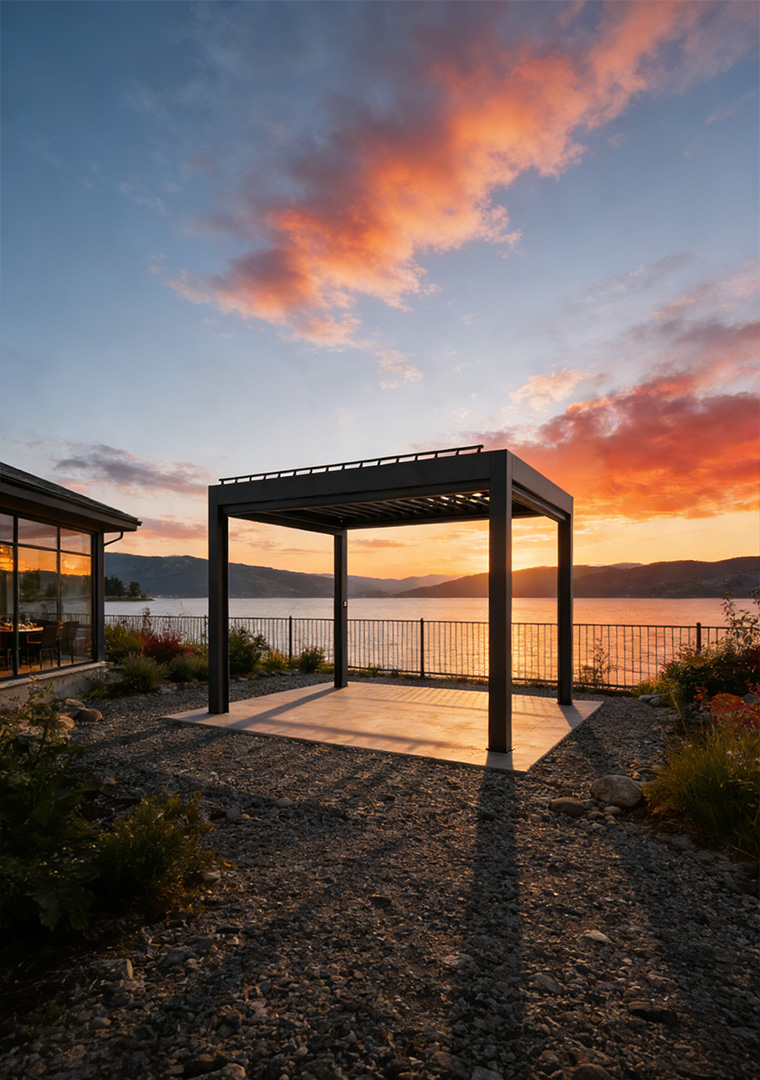
Design teams that have tested integrated shading and PV systems cite consolidated data from organizations like the National Renewable Energy Laboratory (NREL) when projecting performance gains; that institutional analysis is why technical specification matters. My teams have audited rooftop and courtyard systems after multi-year deployments and found consistent failure modes in louver actuation, water shedding, and inverter placement—issues that recur unless addressed in the specification. For commercial projects that require adjustable shading with load-bearing capacity, consider an outdoor louvered pergola specified for wind loading, drainage, and access to service points.
Essential technical criteria
Prioritize structural design for local wind and snow loads, choose corrosion-resistant materials for coastal or humid exposures, confirm motor and sensor redundancy for automated louvers, demand module-level monitoring for photovoltaic elements, and require sealed electrical enclosures rated to the project’s IP and NEC classifications. Specify clear service access and spare-parts kits; a robust supplier will provide detailed as-built drawings and firmware update pathways.
Common procurement mistakes
Buyers often accept generic warranty periods without performance clauses, rely on aesthetic mock-ups rather than engineered shop drawings, and omit commissioning protocols; these omissions create gaps that appear after installation. Avoid contracting merely for “shade”—contract for structural certification, electrical compliance, and measurable generation or shading metrics verified by third-party testing.
Viable alternatives and trade-offs
Simple fixed pergolas reduce mechanical complexity but sacrifice adaptability to seasonal solar angles; fully motorized louver systems improve comfort but increase points of failure and maintenance needs. Solar-integrated louvers offer generation and shading but require upfront coordination with the building electrical system. Match the alternative to the client’s tolerance for maintenance and the project’s expected years of service.
Decision checklist for specification and selection
Require load calculations stamped by a licensed engineer, insist on detailed maintenance plans and response SLAs, demand module-level energy telemetry, verify replacement-part availability for ten years, and include a commissioning and measurement period with acceptance tied to performance benchmarks. Use a weighted score that combines structural integrity (30%), electrical performance (30%), lifecycle cost (20%), and serviceability (20%).
Synthesis and practical value
Confront the procurement problem directly: specify measurable outcomes, verify engineering rather than aesthetics, and choose vendors who document long-term service pathways. That approach turns a commercial pergola from a recurring expense into an engineered asset that contributes to comfort and energy goals, a path many owners find realized through partners like Light Hunter.