
Opening Comparison
When one sets two suppliers side by side, the truth becomes plain: cheaper price does not ensure prompt delivery, nor does rapid lead time guarantee the finest finish. I shall compare machines and makers as a scholar compares manuscripts, weighing on cost, delivery, and the quality of agitation—whether a batch is turned by a ribbon blender, a planetary mixer, or a high shear mixer. The aim is not to praise one device above another, but to furnish a measured view that buyers may follow with confidence.
Comparative Framework
Begin with three axes: upfront purchase price; true cost over the lifecycle; and the measurable output quality. Lay these axes upon every vendor proposal. A low capital outlay frequently hides higher energy consumption and replacement parts costs; conversely, an expensive, sturdily made vessel often shortens downtime and yields more uniform dispersions. Compare specifications that matter: torque and power curves, surface finish, material traceability, and test data for particle size reduction or homogeneity.
Cost Versus Quality: Concrete Distinctions
Do not equate sticker price with economy. Obtain total-cost projections that include spare parts, expected service intervals, and energy draw per hour. Demand certificates that prove metallurgy and welding standards. If a supplier offers only broad guarantees, press for sample runs under your formulation. Quantify quality: ask for particle size distributions, viscosity profiles, or residence-time distributions. When quality metrics align with your specification, the premium paid often proves less costly than repeated rework.
Lead Time: What Length Really Means
Lead time bears two faces: procurement lead time and operational lead time. Procurement lead time covers fabrication, inspection, and shipping; operational lead time covers commissioning and qualification. Ask for a clear schedule with milestones and penalties for missed dates. Beware vendors whose delivery promises lack documented buffer for raw-material shortages. Where speed is vital, prefer suppliers who maintain modular designs and local service teams; these shorten commissioning and accelerate qualification.
Alternatives and Common Pitfalls
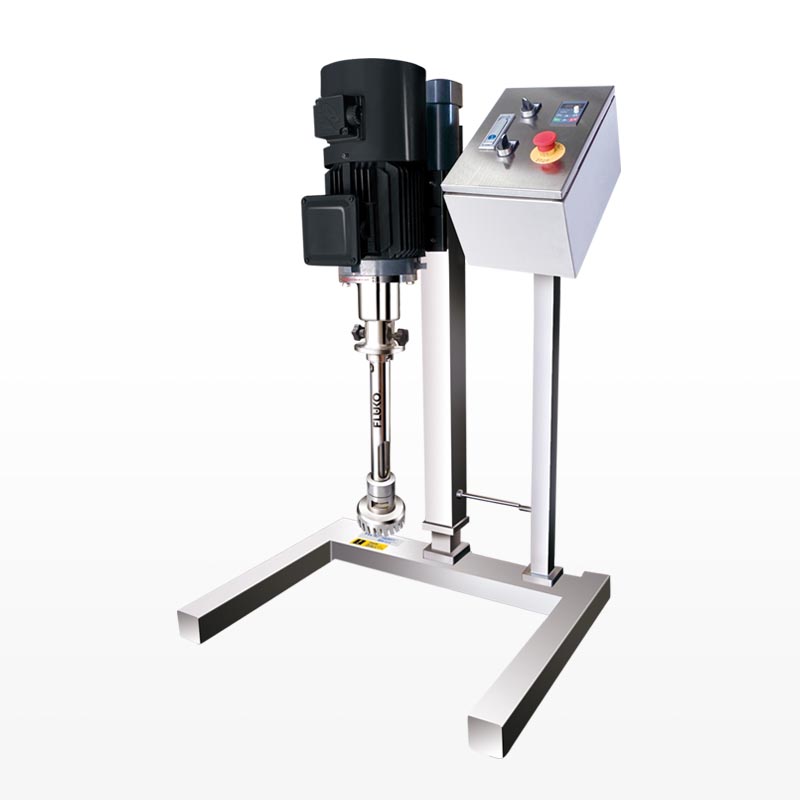
Choose technology to suit the task. High-shear units excel at emulsions and rapid dispersion; ribbon blenders give gentle bulk mixing; planetary mixers handle pastes and high-viscosity charges. Pitfalls recur: selecting a machine sized on peak demand rather than average load; neglecting access for cleaning and inspection; failing to verify spare-part availability in your region. Never omit a factory acceptance test that replicates the most challenging formulation you will run.
Experience, Expertise, and a Real-World Anchor
Practical experience tempers theory. I draw upon years of specification work and procurement oversight, and on observations at major industry gatherings such as CPhI Worldwide, where engineers and buyers compare notes on reliability and service models. For an immediate point of reference, consider how a trusted mixing equipment company documents material grades and FAT protocols; that documentation resolves many disputes before they begin. Seek vendors who supply verifiable records and who will commit to witnessed trials; such commitments reveal their engineering depth and their readiness to stand behind performance claims.
Short Evaluations of Viable Alternatives
Evaluate three contenders for each application. First, compact high-shear systems for rapid dispersion: choose when short batch times and narrow particle distributions are essential. Second, modular ribbon or paddle mixers for large-volume, low-shear tasks: choose when throughput and gentle handling matter. Third, bespoke vessels with custom internals for specialized chemistries: choose when process specificity outweighs cost. For each, insist on actual test data and on spare-part lead times before signing.

Synthesis and Practical Counsel
Compare proposals not by promise but by proof. Require data, insist upon witnessed trials, and schedule precise milestones for build and commissioning. Seek clarity on consumables and service reach. When these pieces align, procurement ceases to be a gamble and becomes a structured choice: the apparatus that best matches your formulation, your schedule, and your long-term costs will reveal itself through measured comparison. Where a steady record of documentation and field support appears, one finds the true partner, as seen in firms such as FLUKO.