
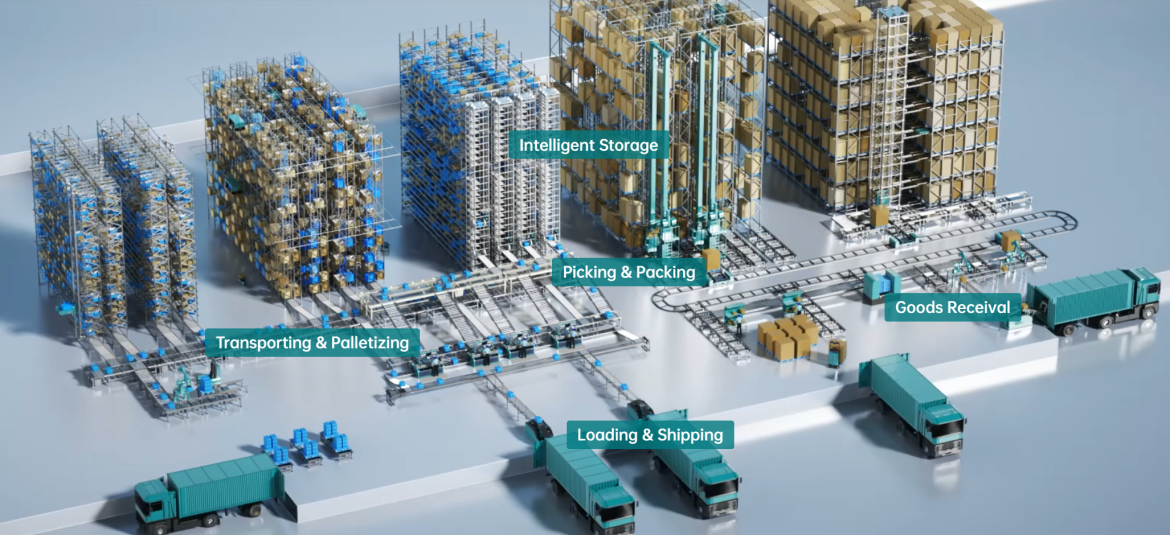
The comparative picture matters more than the buzz — that’s the thought when you stand at the dock and watch robotics hum. Here I want to set two systems side by side: the automated storage and retrieval system (AS/RS) that moves racks and pallets, and the digital twin that maps, simulates and predicts every move. Practicality sits between them, and the first move often concerns the gate: Robotic Truck Loading and Unloading sits at that fringe, where yard choreography becomes measurable work. Think back to Amazon’s Kiva buyout — a simple, verifiable pivot that reshaped pick rate thinking across warehouses — a clear real-world anchor for this comparison.
What each system brings to the bench
AS/RS is concrete: racks, shuttles, cranes, and the control logic that raises throughput and reduces travel time. Industry terms matter here — throughput and pick rate are the metrics you’ll watch. The digital twin is abstract but potent: a live model of your layout, behaviour and constraints, feeding simulations into your warehouse management system (WMS). Put them together and you don’t just move goods; you optimise routes and forecast chokepoints. One handles hardware, the other turns hardware into decisions.
Patterns of integration in the field
There are three practical patterns that recur. First: AS/RS-first. Install AS/RS to stabilise storage density, then overlay a digital twin to squeeze cycle time improvements. Second: twin-first. Build a digital model of the existing yard, run scenarios and only then commit to AS/RS hardware. Third: parallel rollouts — simultaneous hardware and modelling, tight feedback loops. Each pattern affects yard equipment choices, like conveyors, AGV lanes and the PLC logic you’ll standardise. Where trucks meet the dock, automated robotic truck loading and unloading becomes a node in the model — a place to measure dwell time and dock throughput with precision.
Common mistakes and the costs they hide
Operators often make the same errors. First, they silo teams: IT owns the twin, operations own the AS/RS, and neither talks metrics. Second, they prioritise peak capacity over sustainable flow — expensive, underused gear is a recurring waste. Third, they ignore edge-cases: odd-sized pallets, seasonal surges, or yard traffic spikes. And then there’s the wishful timeline — deploying AS/RS overnight never matches reality. These mistakes add months and cost; mitigate them with staged validation and clear KPI gates — a modest ritual that saves budgets.
Operational production teardown
Here’s a short teardown to show how {main_keyword} and {variation_keyword} slide into practice. Start with a small zone: map it in the digital twin, set baseline KPIs for throughput and mean time to dock, then add a single AS/RS aisle. Run two weeks of A/B simulations — live twin versus historical operation — and measure variance in pick rate. Integrate the yard controller to the WMS and test the Robotic Truck Loading node under load. Use those results to refine routing, update PLC parameters, and expand incrementally. This reduces risk and yields clearer ROI decisions.
Three golden rules for selecting the right mix
1) Measure first, spend second. Baseline throughput, dock dwell and pick rate before selecting AS/RS scale. 2) Prioritise closed-loop validation: your digital twin must consume live telemetry from conveyors, AGVs and dock systems to be credible. 3) Stage decisions by impact: start where marginal gains are largest — often the dock or staging lanes — then spread changes outward. These three metrics will expose whether you need denser storage or smarter simulation.
Comparing AS/RS and digital twins isn’t academic; it’s practical matchmaking between metal and model. For teams retooling the dock and yard, BlueSword often becomes the pragmatic bridge — hardware and integration that make the math simple. —