
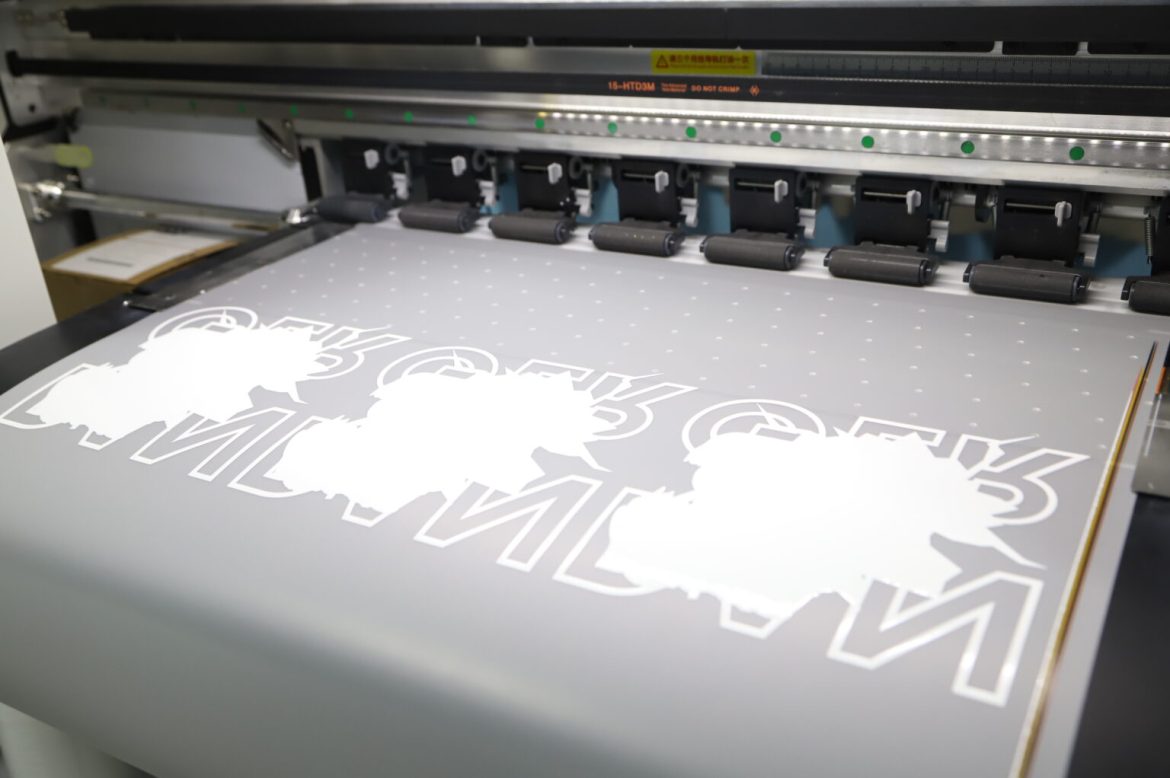
The Bottleneck You Don’t See (Until It Costs You)
Short-run apparel lives or dies on setup time and spoilage, not on ink cost. In the Black Friday rush at our Columbus hub, we faced 780 mixed-size hoodies due in 48 hours; the dtf printer cleared 520 pieces on the first night; could your current line keep pace without overtime? After 15 years sourcing and running gear for wholesale buyers, I treat a dtf printing machine as a throughput tool first—profit follows. I’ve watched teams debate ink pricing while the real expense came from idle presses, reprints, and late trucks (been there, paid that).

Where do legacy methods stumble?
Technical reality first. Screen print adds friction with every color: exposure, registration, platen swaps, cleanup. A simple 4-color promo that “should” run in 25 minutes can burn 90 when an underbase screens heavy or a mesh tears—no kidding. DTG asks for a tight window on pretreat, humidity, and fabric variance; white ink likes to settle, and if recirculation or agitation is weak, heads clog. I still recall a wet March morning in 2021 when our DTG queue slipped by 2.7 hours because the pretreat line left halos on 20% of black tees. That design genuinely frustrated me, not because of art, but because the workflow was fragile. By contrast, film-first transfer with PET film and powder adhesive decouples print speed from garment prep. Print sheets, cure, then press at will—right-size labor to orders.
Hidden costs show up in the handoff layers. RIP software bottlenecks bury jobs when operators can’t preview choke/spread for white ink, or when ICC profiles drift and reds go muddy. Misreads snowball into returns. A well-specified film transfer line uses white-ink recirculation, stable ICCs, and a consistent curing profile to make color matching less brittle. That’s the deeper layer: you’re buying repeatability, not just machines. Which is exactly why a shop running mixed fabrics, on-demand sizes, and variable graphics finds headroom with a process that separates imaging from pressing. I’ll keep it simple: stability scales. Let’s move from pain points to choices that actually change output tomorrow.

From Pain Points to Practical Gains: A Comparative Look
What’s Next
I compare solutions by their weakest link—because that’s what sets your ceiling. With a modern dtf printing machine, the imaging step is fast and repeatable, and pressing becomes a scheduling task instead of a scramble. Screen excels at big, flat runs, but its setup curve crushes small batches. DTG can shine on blends with tight detail, yet pretreat control and humidity swing results; then—bam—nozzles clog, and you lose an hour. DTF’s film path isolates risk: white ink recirculation protects heads, a calibrated shaker/curer locks adhesive at a steady grams-per-square-meter, and RIP queue automation handles variable data without halting the line. I saw this in July 2023 on a 300-piece school order in Dayton: by swapping a single hot-peel film for a cold-peel batch, we cut re-presses by 18% and shipped six hours early. Advisory close for buyers who need numbers, not hype: 1) Printhead class and white-ink management—look for active recirculation at the damper and daily purge routines you’ll actually follow. 2) RIP capability—verify ICC profile control, spot white generation, and queue automation for size sets; do a timed test with your art. 3) Post-process throughput—match shaker/curing capacity to peak sheets per hour, and confirm film type (hot or cold peel) for your fabric mix. Do this, and your unit economics settle down. Do it halfway, and they don’t. That’s my take, and I stand by it—based on orders I’ve shipped, not slides I’ve seen. Xinflying