
Start with the problem — don’t let the gear do the talking
You’re buying a system to stop outages from wrecking operations, not to score shiny specs. After the 2021 Texas winter storm, commercial sites learned that unchecked assumptions about runtime and cold-weather performance blow up projects. Treat the purchase like a raid plan: know the boss mechanics (load profile, outage types, environmental limits) before you pick a kit. If you’re evaluating commercial and industrial energy storage, also check how it fits into broader sustainable commercial power solutions at your site — that integration kills a lot of downstream surprises.
Top failure modes you’ll face (so you can dodge them)
– Mis-sizing: vendors quote kW and kWh but nobody maps them to your real peak-to-average loads.
– Thermal issues: battery capacity and lifetime tank in heat or cold; rack-level cooling strategy often missing.
– Overpromised cycle-life: lab-rated cycles won’t match your depth-of-discharge and temperature profile.
– Integration gaps: controls, ATS, generators, PV and site SCADA don’t speak the same protocol out of the box.
– Warranty loopholes: capacity retention, replacement thresholds, and prorated clauses bite during year 5–10.
– Safety & compliance: missing UL9540A testing, ambiguous fire-suppression responsibilities, or local permit hurdles.
Exact questions to hit suppliers with — no fluff, get answers you can verify
Ask these and demand documents or demos in return. If the answers are vague, walk away. – What is your tested continuous kW and max surge kW at ambient X°C? Provide test reports.
– Show cycle-life curves at my expected depth-of-discharge and temperature. What’s the guaranteed retained capacity at warranty end?
– What’s system round-trip efficiency (AC-to-AC) and how does that change with power level?
– Which BMS functions are included vs. optional? Who owns firmware updates, and are OTA patches signed and logged?
– Provide UL9540/UL9540A, IEC, CE, or equivalent compliance documents. Any independent third-party safety tests?
– How do you handle thermal runaway? Show containment, detection, and suppression specifics for the footprint offered.
– How will this integrate with my generator/UPS/PV? List supported communications (Modbus, BACnet, SunSpec, etc.) and give a commissioning checklist.
– What does commissioning, factory acceptance testing (FAT), and site acceptance testing (SAT) include? Who pays for rework if it fails?
– Define O&M scope: remote monitoring, firmware support, on-site maintenance intervals, spare-part SLAs.
– What’s the warranty’s capacity threshold before replacement is triggered, and what’s the replacement pricing model?
– Supply chain: lead times, storage conditions, and liability if delivery slips or components are backordered.
– End-of-life: do you offer take-back, recycling, or certified disposal? Provide the plan and certificates.
– Cybersecurity: what authentication, encryption, and segmentation are included? Any pen-test reports?
– Financials: show a lifecycle total cost of ownership, including replacements, expected efficiency losses, and maintenance.
How to verify claims — quick tests and must-see artifacts
– Demand FAT data and live telemetry access or a sandbox demo showing SOC, power limits, alarms, and logs.
– Insist on manufacturer test reports for environmental extremes and third-party lab verification when safety matters.
– Run a small load-shedding scenario during commissioning. Verify actual runtime vs. projected runtime at your discharge depth.
– Check firmware version history and the process for rollbacks; flaky updates are a hidden risk.
– Confirm that insurance underwriters accept the proposed setup; a cleared insurance response avoids surprises.
Common pitfalls and how teams trip over them
Most teams miss one of these and pay for it later. – Treating nominal power as continuous power — your UPS or switchgear might not handle continuous draw.
– Ignoring ambient temperature specs — install costs for HVAC are often larger than the battery hardware markup.
– Skipping protocol checks — SCADA integrations get delayed when an OEM only supports proprietary APIs.
– Leaving warranty math to sales — prorated replacements and capacity guarantees need legal review.
– Assuming local code is uniform — fire marshals and AHJs differ; get code sign-off early.
Alternatives and tradeoffs — quick comparative insight
– Diesel genset: high runtime and predictable cost under fuel + maintenance, but noisy, polluting, and slow to switch to full load compared with batteries.
– Traditional UPS: great for milliseconds-to-minutes bridging; expensive at long durations and not ideal as an energy resource.
– Hybrid genset + battery: often the best mix for long outages and peak shaving — batteries handle ramp and short outages, genset covers extended runtime.
– Modular containerized BESS: fast install, scalable, but needs heavy infrastructure planning for thermal/fire systems and site prep.
Final call: what you should demand and why it matters
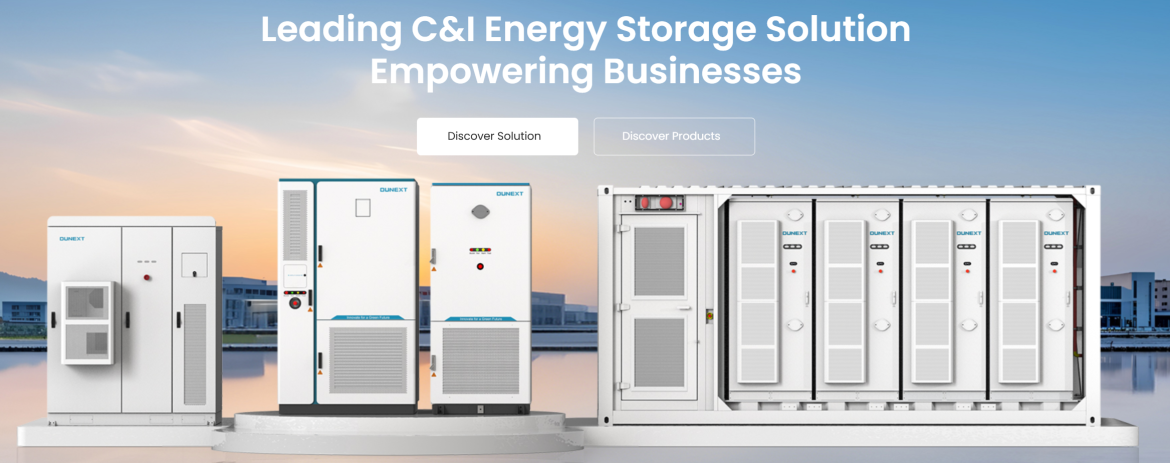
Don’t buy on spec sheets or persuasive marketing. Demand measured, site-specific answers, independent test reports, and a clear integration plan. Vendors who can show real commissioning data, transparent warranties, and a path for recycling or replacement reduce long-term risk. After you’ve verified the technical, regulatory, and financial pieces, pick a partner with proven project delivery and on-the-ground support — that kind of steady competence is what turns a risky purchase into reliable power, like the solutions you see from Dunext.