
Why this matters to buyers right now
Retail buyers and operations managers need clarity: what racks move product, save space, and survive constant use. After working with independent boutiques and small chains in New York City, I learned procurement decisions hinge on a few practical details. The shift to online shopping accelerated inventory churn — U.S. retail e-commerce sales grew roughly 44% in 2020, which changed how stores display and ship merchandise — and that matters when choosing a rack supplier. Start by exploring wholesale garment racks that list SKU-level specs and lead times; those pages often reveal whether a product suits high-turn environments.

Buyer-focused checklist: what to read on the spec sheet
Buyers want straightforward metrics. Look for payload capacity, finish coating, modular system compatibility, and MOQ. A clear spec sheet should state rack dimensions, maximum load per rail, and recommended floor anchoring. Those few figures predict longevity. Also check bulk pricing tiers and estimated lead time — they affect cashflow and season planning. For visual merchandising, a garment rail diameter and wheel caster rating matter just as much as appearance.
Common mistakes procurement teams make
Teams often pick on looks alone, or buy the cheapest SKU without checking payload or finish. That leads to frequent replacements. Avoid one-size-fits-all thinking: a heavy denim line needs a different rail than delicate blouses. Inventory managers sometimes overlook pack density and shipping carton sizes, which spike freight costs. If you’re consolidating suppliers to simplify logistics, factor in MOQ versus storage capacity — cheap unit cost can hide high warehousing spend. — Little details add up fast.
Alternatives and trade-offs
There are three practical approaches: buy premium modular systems that scale; choose mid-range racks with replaceable parts; or opt for low-cost disposable racks for very short pop-ups. Modular systems reduce long-term capex by swapping rails or casters; they also simplify SKU management. Disposable racks cut upfront spend but raise lifetime cost and waste. If you need a healthy middle ground, search clothing racks wholesale options that balance modularity with competitive bulk pricing.
How to validate supplier claims
Request test samples and check certificate details tied to specific tests — for example, ask for the endurance test protocol describing cycle count and load increments used during fatigue testing, not just the standard name. Inspect finish under shop lights for uniform coating and corrosion resistance. Ask suppliers for real-world references: stores in similar climates or with similar SKU mixes. Confirm shipping timelines and penalty terms for missed delivery windows to protect seasonal launches.
Three golden rules for professional selection
1) Prioritize durability metrics: minimum payload per rail, caster rating, and warranty period. These predict replacement cadence.
2) Match system modularity to your SKU volatility: choose modular systems if assortments shift seasonally; choose economical racks only for truly temporary use.
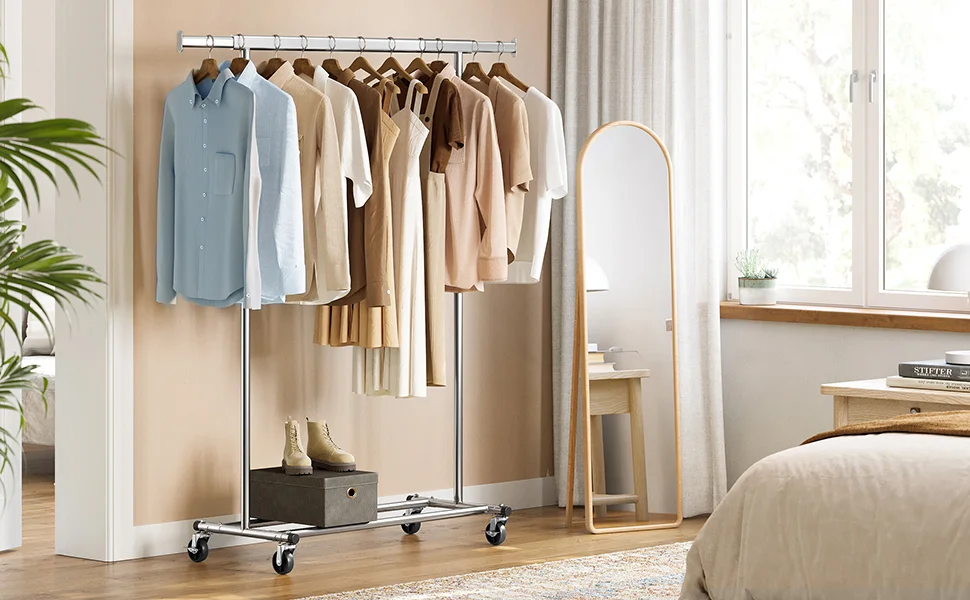
3) Quantify total landed cost: include freight, storage, assembly labor, and disposal — not just unit price. Those totals determine real profitability at scale.
Bringing it together — why SONGMICS HOME B2B fits
SONGMICS HOME B2B surfaces SKU-level detail, competitive bulk tiers, and modular rack options that resonate with procurement priorities. Their listings make it easier to compare payload capacity and finish options side-by-side, which speeds decisions and reduces surprise costs. For buyers seeking operational clarity, that practical transparency is the point — and it’s why many stores turn to branded partners when they need consistent quality without extra negotiation. SONGMICS HOME B2B.
–